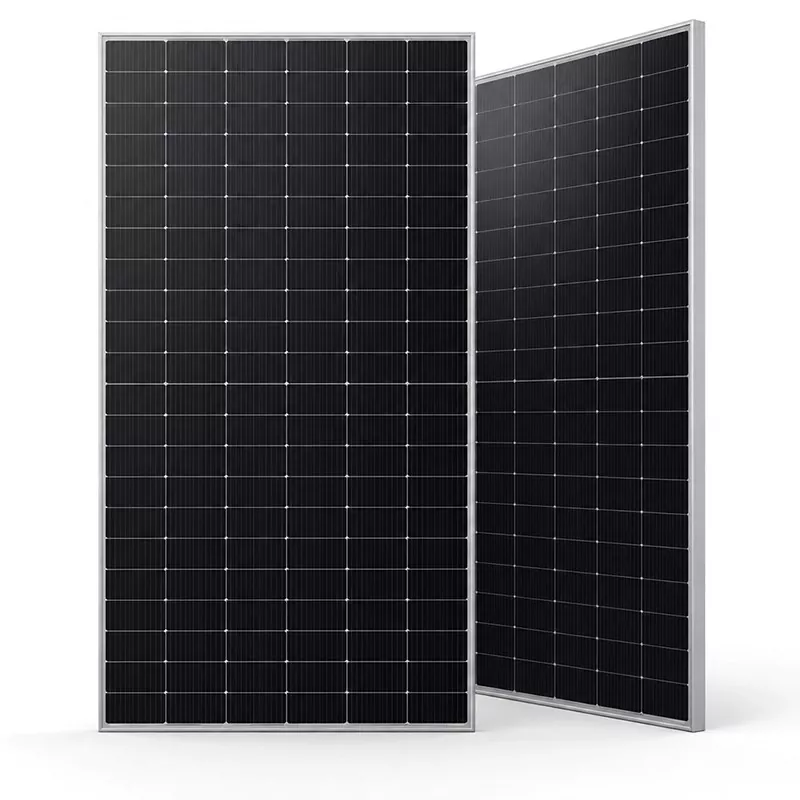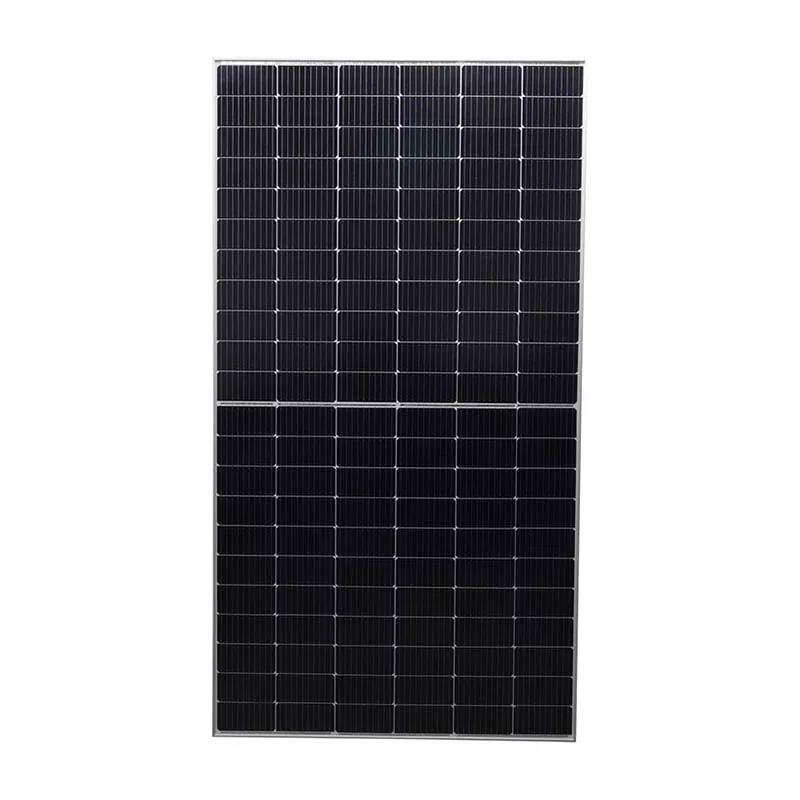
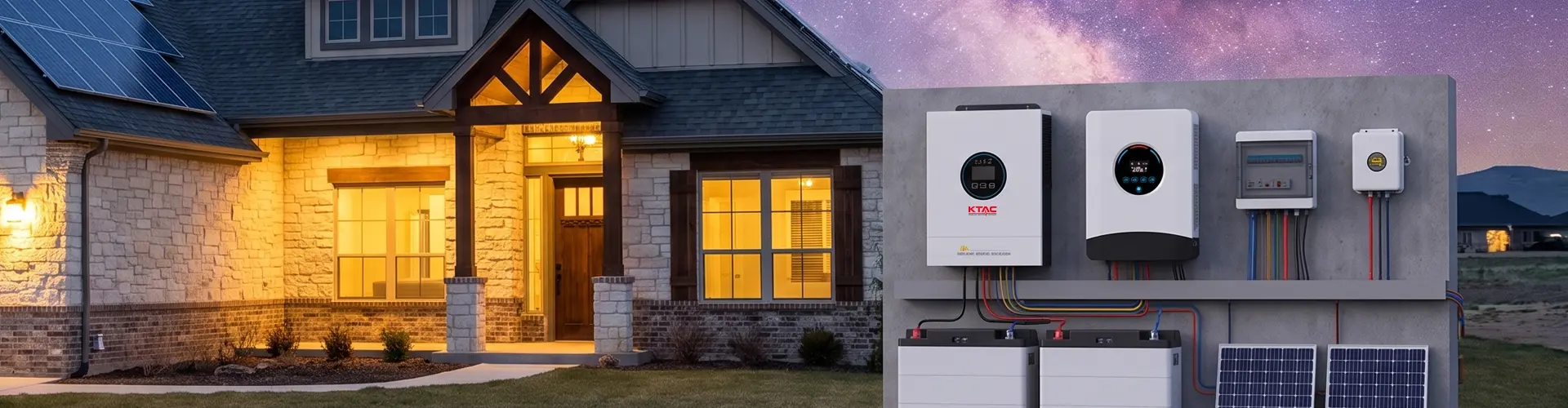
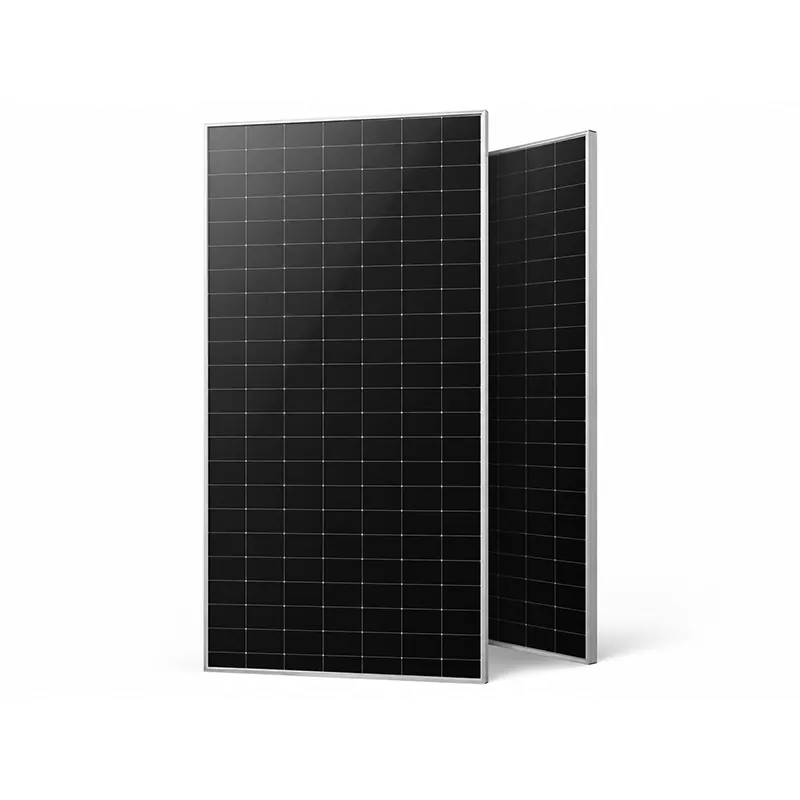
Developed for professional solar installations, the Comet 2U series uses N-Type ABC cells in a 144-cell (6 × 24) configuration. The series offers seven rated power classes from 640W to 670W. The top-rated 670W version provides 45.50V at maximum power (Vmp), 14.73A operating current (Imp) and 54.80V open-circuit voltage (Voc) under standard test conditions (STC). Module selection should account for the actual model and the receiving inverter's voltage and current limits.
High operating temperatures can reduce PV module power. AIKO specifies a Pmax temperature coefficient of −0.26%/°C and a Voc coefficient of −0.22%/°C. These values give installers a meaningful basis for estimating hot-weather power output and cold-weather string voltage. Under nominal operating cell temperature (NOCT) conditions in the datasheet, the 670W class is listed at 505W; STC and NOCT are different laboratory reference conditions, not guaranteed field outputs.
For outdoor durability, the module combines 3.2 mm tempered glass, anodized aluminum frame, an IP68 junction box with three bypass diodes and a maximum system voltage of 1500V DC. The datasheet lists a front-side static load rating of 5400Pa, rear-side 2400Pa and a hail test using 25 mm hail at 23 m/s. Project-specific structure, local code requirements and the approved mounting method must still be verified.
Long-term performance is supported by a published first-year degradation allowance of no more than 1% and annual degradation allowance of no more than 0.35% from years 2–30. AIKO lists a 15-year product warranty, extendable to 25 years subject to the applicable offer, and a 30-year linear performance warranty. Warranty eligibility, geographic conditions and exclusions should always be confirmed in the official warranty terms.
|
Parameter |
Manufacturer datasheet value |
|
Product family |
Comet 2U Mono-Glass Module |
|
Model series |
AIKO-G-MCH72Mw (G640 to G670) |
|
Rated output / efficiency |
640–670W / 23.7–24.8% |
|
Cell technology / quantity |
N-Type ABC / 144 cells (6 × 24) |
|
Glass / frame |
3.2 mm tempered glass / anodized aluminum |
|
Dimensions / weight |
2382 × 1134 × 30 mm / 27.1 kg ±3% |
|
Junction box / diodes |
IP68 / 3 bypass diodes |
|
Connector |
MC4 compatible or original MC4-EVO2A (variant dependent) |
|
Cable |
4 mm² (IEC), 12 AWG (UL); +400/−200 mm, ±1400 mm or customized length |
|
Maximum system voltage |
1500V DC |
|
Maximum series fuse |
25A |
|
Protection class / fire rating |
Class II / IEC Class C |
|
Operating temperature |
−40°C to +85°C |
|
Pmax / Voc / Isc temperature coefficients |
−0.26%/°C / −0.22%/°C / +0.05%/°C |
|
Static load (front / rear) |
5400Pa / 2400Pa |
|
Hail test |
25 mm diameter at 23 m/s |
|
Power / Voc and Isc tolerance |
0 to +3% / ±3% |
|
Packaging |
36 modules/pallet; 144/20′GP; 720/40′HC |
|
Warranty |
15-year product (extension possible); 30-year linear performance |
STC reference: irradiance 1000 W/m², cell temperature 25°C, AM1.5. All values below are manufacturer-stated.
|
Pmax (W) |
Voc (V) |
Vmp (V) |
Isc (A) |
Imp (A) |
Efficiency |
|
640 |
54.20 |
44.90 |
15.00 |
14.26 |
23.7% |
|
645 |
54.30 |
45.00 |
15.06 |
14.34 |
23.9% |
|
650 |
54.40 |
45.10 |
15.12 |
14.42 |
24.1% |
|
655 |
54.50 |
45.20 |
15.18 |
14.50 |
24.2% |
|
660 |
54.60 |
45.30 |
15.24 |
14.57 |
24.4% |
|
665 |
54.70 |
45.40 |
15.30 |
14.65 |
24.6% |
|
670 |
54.80 |
45.50 |
15.36 |
14.73 |
24.8% |
Manufacturer-stated NOCT reference: irradiance 800 W/m², ambient temperature 20°C, wind speed 1 m/s.
|
Pmax STC class |
Pmax (W) |
Voc (V) |
Vmp (V) |
Isc (A) |
Imp (A) |
|
640 |
482 |
51.18 |
42.40 |
12.13 |
11.38 |
|
645 |
486 |
51.28 |
42.50 |
12.18 |
11.44 |
|
650 |
490 |
51.37 |
42.59 |
12.23 |
11.51 |
|
655 |
493 |
51.47 |
42.69 |
12.28 |
11.57 |
|
660 |
497 |
51.56 |
42.78 |
12.32 |
11.63 |
|
665 |
501 |
51.66 |
42.87 |
12.37 |
11.69 |
|
670 |
505 |
51.75 |
42.97 |
12.42 |
11.76 |
The seven power classes reach 670W at STC. Higher power per module may reduce module count for a target DC capacity, subject to layout, electrical design and installed cost.
At the top power class, the manufacturer states 24.8% module efficiency. This is especially valuable when rooftop area or mounting positions are constrained; actual system capacity still depends on setbacks, spacing and installation geometry.
The manufacturer specifies N-Type ABC technology and highlights improved aesthetic appearance and partial-shading optimisation. The datasheet does not quantify additional yield from shading, so site-specific results should not be guaranteed.
A relatively low power temperature coefficient reduces the sensitivity of rated power to increases in cell temperature. At 65°C cell temperature, the linear coefficient suggests roughly 10.4% less power than at 25°C, before other losses; this is a calculation, not a field-output guarantee.
The stated maximum first-year degradation is 1%, with a maximum annual rate of 0.35% in years 2–30. The plotted minimum at 30 years is 88.85%; product warranty is separately stated as 15 years with extension possibilities.
The 3.2 mm tempered glass, anodized aluminum frame and published 5400Pa/2400Pa static load ratings support engineering review for challenging environments. Mechanical ratings do not replace regional wind/snow calculations or approved mounting instructions.
An IP68-rated junction box with three bypass diodes is specified. The diodes can help reduce some partial-shading consequences, but cannot eliminate shading losses or replace careful string design.
A maximum system voltage of 1500V DC supports appropriate utility and commercial system architectures. Series string length must still be determined using low-temperature corrected Voc and the inverter’s DC input limits.
The specified output power tolerance is 0 to +3%, giving purchasers a defined nameplate power tolerance under standard test conditions.
Cable lengths can be customized according to the datasheet. The published transport configuration is 36 modules per pallet and 720 per 40-foot high-cube container, supporting logistics planning subject to current loading confirmation.
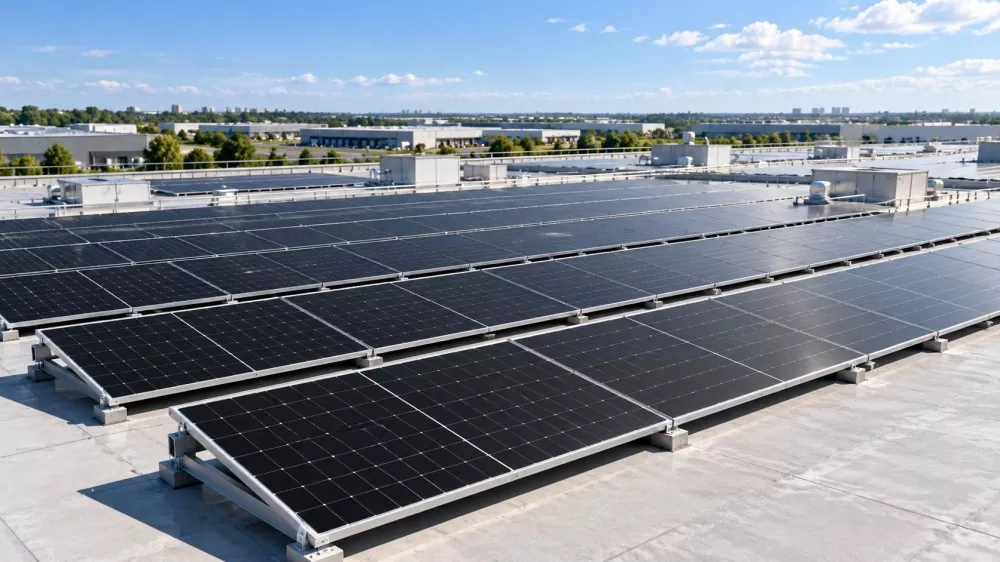
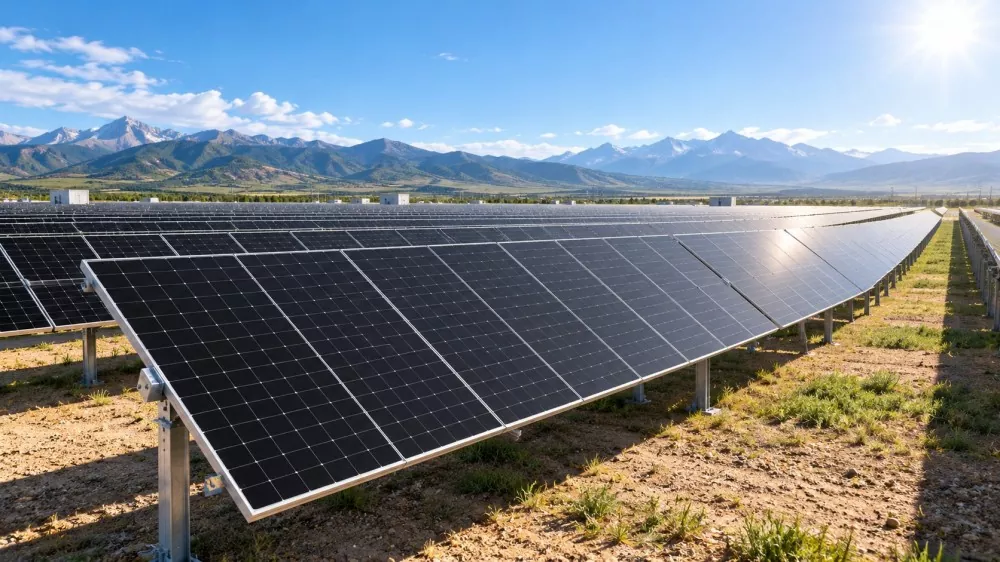
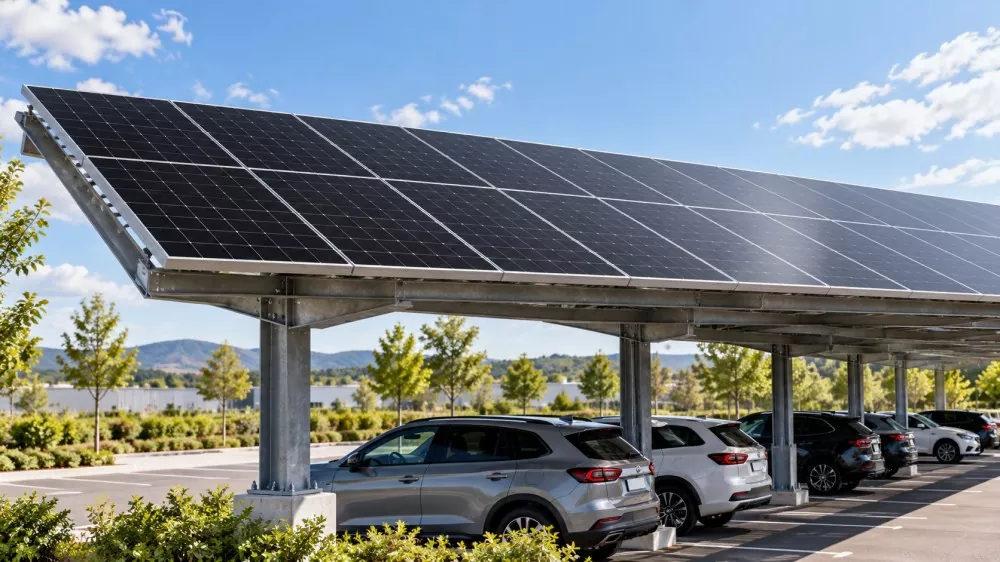
Factories, warehouses, logistics centers and other buildings where high module wattage and roof-space efficiency can support cost-effective PV capacity.
Large installations requiring high-output modules, 1500V DC design potential and planning for multi-decade energy yield.
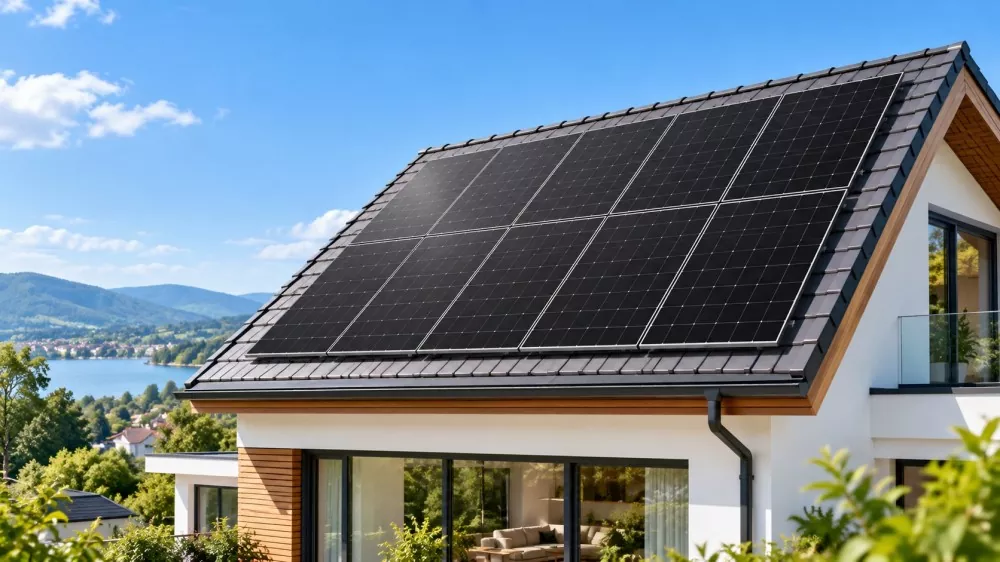
Homes with sufficient structural capacity and roof dimensions for the 2382 mm module length, including projects where appearance matters.
Parking structures that combine on-site generation with practical use of available canopy area, subject to structural and fire safety design.
Projects in warm regions where module temperature behavior and available roof ventilation influence yield and design.
The value of a large-format PV module is not simply its wattage. Developers and installers must balance energy output, available mounting space, system voltage, current compatibility, structural loads, expected degradation and total installed cost. Comet 2U provides documented data across all of these key design dimensions: up to 670W and 24.8% efficiency, a −0.26%/°C Pmax coefficient, 1500V DC system rating, specified mechanical loading and a 30-year linear performance warranty. KTAC can help customers evaluate the appropriate power class and integrate panels into a complete photovoltaic and energy-storage solution; final engineering approval and commercial terms require project-specific review.
No. 670W is the maximum nameplate rating of the G670 model at STC: 1000 W/m² irradiance, 25°C cell temperature and AM1.5 spectrum. The same datasheet lists 505W under its NOCT reference conditions. Actual output changes with sunlight, cell temperature, shading, dust, mounting angle, DC losses and operating point. Do not treat either laboratory figure as guaranteed daily or peak onsite production.
They share the same specified overall size, cell type and construction, but electrical performance and rated efficiency vary. For example, G640 is 640W, Voc 54.20V, Vmp 44.90V, Isc 15.00A, Imp 14.26A and 23.7% efficient; G670 is 670W, Voc 54.80V, Vmp 45.50V, Isc 15.36A, Imp 14.73A and 24.8% efficient (STC). Confirm available bin and price before selecting on nameplate power alone.
Possibly, but compatibility depends on the inverter PV input, not battery voltage alone. For G670, Vmp is 45.50V and Voc is 54.80V at STC. A low-voltage MPPT may need panels in series to exceed its start and working voltage, while a high-voltage PV input may support much longer strings. Always check MPPT range, PV starting voltage, maximum Voc, maximum PV input current, short-circuit current and permitted PV power. Battery voltage is not a direct specification for panel string sizing.
The datasheet gives a 1500V maximum system voltage, but this alone does not determine an acceptable string count. As a simplified example, at 25°C, 27 × 54.80V = 1479.6V, already close to 1500V; cold-weather Voc increases because the Voc coefficient is −0.22%/°C. A safe series count must be calculated for the site minimum temperature, module Voc tolerance, applicable design standard and the inverter’s lower maximum DC voltage, if any. The example is not an approved string design.
For G670 at STC, Imp is 14.73A and Isc is 15.36A. Check both the inverter’s operating PV current limit and permitted short-circuit current per input. Parallel strings increase current; series modules increase voltage while nominal string current stays roughly the same. Also consider manufacturer-specific MPPT input configuration and electrical code. An inverter with an input current rating below module Imp may clip current, while exceeding permitted Isc can create a design violation.
The published Pmax temperature coefficient is −0.26%/°C, referenced to 25°C cell temperature. For illustration only, if cell temperature rises to 65°C, the coefficient gives a 40 × 0.26% = 10.4% relative reduction: 670W × (1 − 0.104) ≈ 600W at otherwise identical STC irradiance and conditions. This is a simplified temperature correction—not an actual site forecast. Airflow, mounting clearance, irradiance and electrical losses also affect realized output.
AIKO lists “Partial Shading Optimisation” as a technical feature and specifies three bypass diodes. The datasheet does not report a numerical shaded-energy advantage or detailed shading test protocol. Shade can still substantially reduce series-string output, and bypass diode operation can create multiple peaks on the array power-voltage curve. Site assessment, shade-free design and suitable MPPT architecture remain important.
The attached product is identified as a “Mono-Glass Module”, with 3.2 mm tempered glass specified. The datasheet does not provide bifaciality, rear irradiance gains or rear-side power ratings. Do not market it as a bifacial module or promise rear-side energy gain based on this document. If bifacial performance is required, request a separate explicitly bifacial datasheet.
A single module measures 2.382m × 1.134m, giving about 2.701m² of panel surface. At 670W this corresponds to about 248W/m² of module area under STC, consistent with the stated 24.8% efficiency. A real rooftop needs additional clearance for edges, access, maintenance paths, tilt/shading, structural restrictions and local fire setbacks. Therefore, dividing total roof area by 2.701m² overstates usable module count.
The manufacturer states first-year degradation ≤1% and annual degradation from years 2–30 ≤0.35%, with a plotted 30-year guaranteed performance of 88.85%. The graph also marks 90.6% at year 25. For the 670W rating, 88.85% corresponds to approximately 595.3W in the warranty reference sense, not an assurance of real-time output after 30 years. The enforceable guarantee depends on official warranty testing procedures, conditions and exclusions.
No. The datasheet separately identifies a 15-year product warranty (extendable to 25 years, subject to arrangement) and a 30-year linear performance warranty. Product warranties and performance warranties cover different types of issues. Review official manufacturer terms, registration requirements, authorized channels, geographic coverage, claim processes and warranty exclusions before committing to a customer.
The published module testing figures are 5400Pa front static loading, 2400Pa rear static loading and 25mm hail at 23m/s. These are module-level figures under particular test conditions, not blanket guarantees for every storm, roof or mounting system. Actual suitability requires local wind and snow load calculations, specified clamping zones, certified mounting structures and installation to the manufacturer’s instructions.
No automatic interchangeability should be assumed. The datasheet states MC4-compatible / original MC4-EVO2A options, but field mating must follow the approved exact connector pairing, manufacturer instructions and applicable electrical standards. Mixing unapproved connector brands or types may create resistance, heating or compliance issues. Verify which connector version is supplied for the order.
The module maximum series fuse rating is 25A. Whether string fusing is required depends on the number of parallel strings, reverse-current exposure, local codes and the applicable manufacturer design instructions. Proper PV-rated isolators, surge protection, conductors, overcurrent protection and grounding/bonding must be engineered for the entire system. The 25A value is a maximum module series fuse rating, not a general instruction to install a 25A fuse in every project.
Mixing 640W and 670W versions is not usually the preferred design. Their Vmp and Imp differ, and a series string operates at a shared current, so mismatched panels can limit string output. Modules in parallel should also be appropriately voltage-matched. Use matching models per string wherever possible, and obtain a qualified designer’s approval if mixed bins are unavoidable.
The datasheet lists 36 modules per pallet, 144 per 20-foot GP and 720 per 40-foot HC. Actual order loading may be affected by packaging version, destination restrictions, container payload, and shipping arrangements. Buyers should confirm current pallet size, gross weight, packing list, availability and any breakage/inspection requirements before finalizing freight cost.
Request the model-specific current datasheet, product and performance warranty statements, factory serial-number traceability, relevant third-party certificates, connector specification, installation manual (including clamping zones), EL or quality inspection policy, packaging drawing and any market-specific conformity documents. The attached brochure visually shows some certification logos, but it is not itself a certificate or proof of project-specific regulatory compliance.
Provide installation country and city; rooftop dimensions or site plan; roof material and load limits; desired DC array kWp; grid/off-grid/hybrid architecture; inverter model and MPPT ratings; minimum local temperature; expected shading; mounting configuration; delivery port and target quantity. These inputs allow a practical check of mechanical fit, series/parallel configuration, current limits and procurement quantities before quotation.
Source: manufacturer datasheet “Comet 2U / AIKO-G-MCH72Mw, 640–670W”, version V4.1_202510_DsDr__EN, supplied by the customer. Product specifications and published warranties above are transcribed or closely paraphrased from that document. Design examples, operating explanations, purchasing recommendations and application descriptions are engineering guidance added for reader usefulness, not manufacturer test results.
Claims not supported by the supplied datasheet—such as guaranteed energy gains under shading, bifacial rear gain, universal inverter compatibility, precise annual kWh yield and unconditional weatherproofing—have intentionally not been made. Check product availability, the current revision, and the manufacturer’s installation and warranty terms before publishing or quoting.
Reference website layout: https://www.ktacsolar.com/3-phase-100kva-servo-motor-avr.html (structure adapted; this document is not a reproduction of the AVR product content).
Address
No. 82, Xiaotang Gongye Avenue, Shishan Town, Nanhai District, Foshan City, Guangdong Province, China
Tel