KTAC TECHNOLOGY, as a professional home energy storage battery manufacturer and supplier in China, provides full-series residential LiFePO4 energy storage battery solutions for global household solar self-consumption, power backup and off-grid energy systems. Our home energy storage battery lineup covers diversified capacity specifications, including 25.6V314Ah, 51.2V100Ah, 51.2V200Ah, 51.2V314Ah and 51.2V628Ah models.
All batteries adopt Grade-A LiFePO4 cells, intelligent BMS management and standardized factory production, balancing safety, service life and expandability. Strictly certified and fully compatible with mainstream hybrid inverters, our home battery packs serve as reliable, cost-effective and scalable energy storage equipment for modern family energy independence.
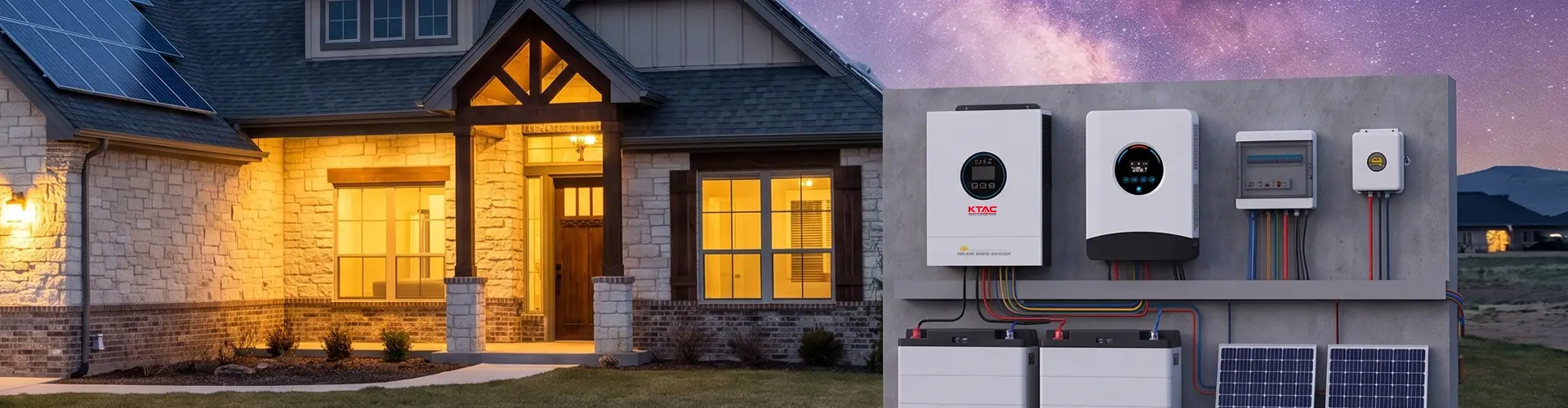
- Precision-Engineered for Residential Use: The entire home energy storage battery series is specifically designed for residential PV storage, emergency backup during power outages, and off-grid living. Unlike heavy-duty industrial storage systems, these units feature a compact, wall-mountable design with clean cabling and quiet operation, perfectly aligning with daily household electricity habits and interior aesthetics.
- Safe LiFePO4 Technology: The entire lineup utilizes highly stable Lithium Iron Phosphate (LiFePO4) chemistry, eliminating thermal runaway risks. All models hold authoritative international certifications (IEC62619, UN38.3, CE) and feature built-in high-power DC circuit breakers, ensuring household safety and suitability for long-term operation in enclosed indoor environments.
- Ultra-Long Cycle Life: Under standard operating conditions, the batteries achieve up to 6,000 charge-discharge cycles with minimal capacity degradation. Stable long-term performance significantly reduces replacement and maintenance costs, offering superior long-term value.
- Smart Compatibility & Plug-and-Play: Equipped with dual communication protocols (CAN and RS485), the units seamlessly integrate with the vast majority of hybrid and off-grid inverters on the market. Features include pre-charging, cell balancing, remote data monitoring, and firmware upgrades; installation and commissioning are simple, making them suitable for both new installations and retrofitting existing PV systems.
- Entry-Level Solution for Small Homes (51.2V 100Ah / 5.12kWh): Lightweight and installable by a single person, this low-investment model is ideal for apartments, small homes, balcony PV setups, and DIY projects. It supports scalable capacity expansion, making it the top choice for those new to home energy storage.
- Standard Whole-Home Storage Solution (51.2V 200Ah / 10.24kWh): Featuring an ultra-slim wall-mount design that balances capacity with space efficiency, this model is suitable for standard three-bedroom homes and detached houses, meeting needs for daily PV self-consumption and short-term outage backup.
- High-Power, High-End Energy Storage Solution (51.2V 628Ah / 32.15kWh): Features a 2P16S shunt architecture and 300A high-current output. Capable of powering high-energy-consumption equipment such as heat pumps and EV charging stations; ideal for high-demand energy storage scenarios in luxury detached homes, farms, and small workshops.
- Modular Parallel Expansion: The entire KTAC home energy storage battery series supports parallel networking of multiple units of the same model. Battery capacity can be increased later to meet changing needs such as solar system expansion, additional appliances, or increased household occupancy without replacing the entire system.
- Reduced System Complexity: High-capacity models significantly reduce the number of units required for parallel connection. For instance, an 80kWh requirement can be met with just five 314Ah units or four 628Ah units, effectively saving wall space, minimizing the use of copper busbars and communication cables, and lowering the risk of installation errors.
- Stable Parallel Operation: The proprietary BMS features built-in load balancing and adaptive pre-charge functions. When multiple units operate in parallel, the system intelligently distributes charge/discharge loads, preventing single-unit overloads and voltage imbalances to ensure long-term, stable operation after expansion.
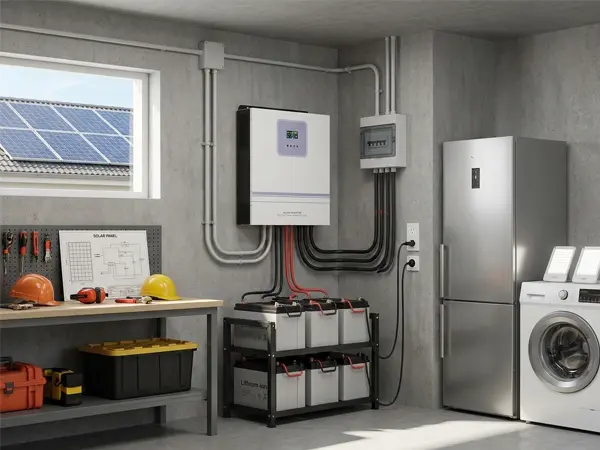
- Residential PV Self-Consumption: Stores excess solar energy generated during the day to power the home at night, lowering peak-hour electricity costs and reducing reliance on the municipal grid.
- Emergency Backup for Power Outages: Maintains power supply for lighting, refrigerators, internet connectivity, and essential home appliances during grid outages, ensuring the continuity of basic household operations.
- Power Supply for Remote Off-Grid Homes: Provides a stable, independent energy storage power source for remote cabins, self-built rural homes, and areas without grid coverage.
- Small-Scale Residential/Light Commercial Energy Storage: Suitable for high-consumption home appliances, small shops, farms, and backup power for communication base stations.
A: Yes, the 51.2V 314Ah LiFePO4 Battery Pack supports up to 16 devices connected in parallel, allowing flexible expansion of energy storage capacity according to actual power consumption needs.
A: Under normal temperature (25°C) and 80% discharge depth conditions, the battery achieves 6,000 cycles with low capacity loss during long-term use.
A: Yes, the charging temperature range is 0°C to 40°C, and the discharge operating temperature range is -20°C to 40°C, ensuring stable operation across various climate conditions.
A: No. Different capacity models must not be connected in parallel. The BMS will detect capacity mismatch and trigger a protection fault. All units in a parallel bank must be of the same model and same capacity.