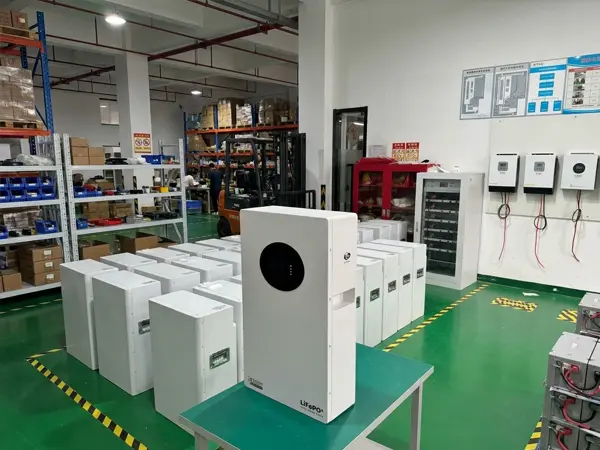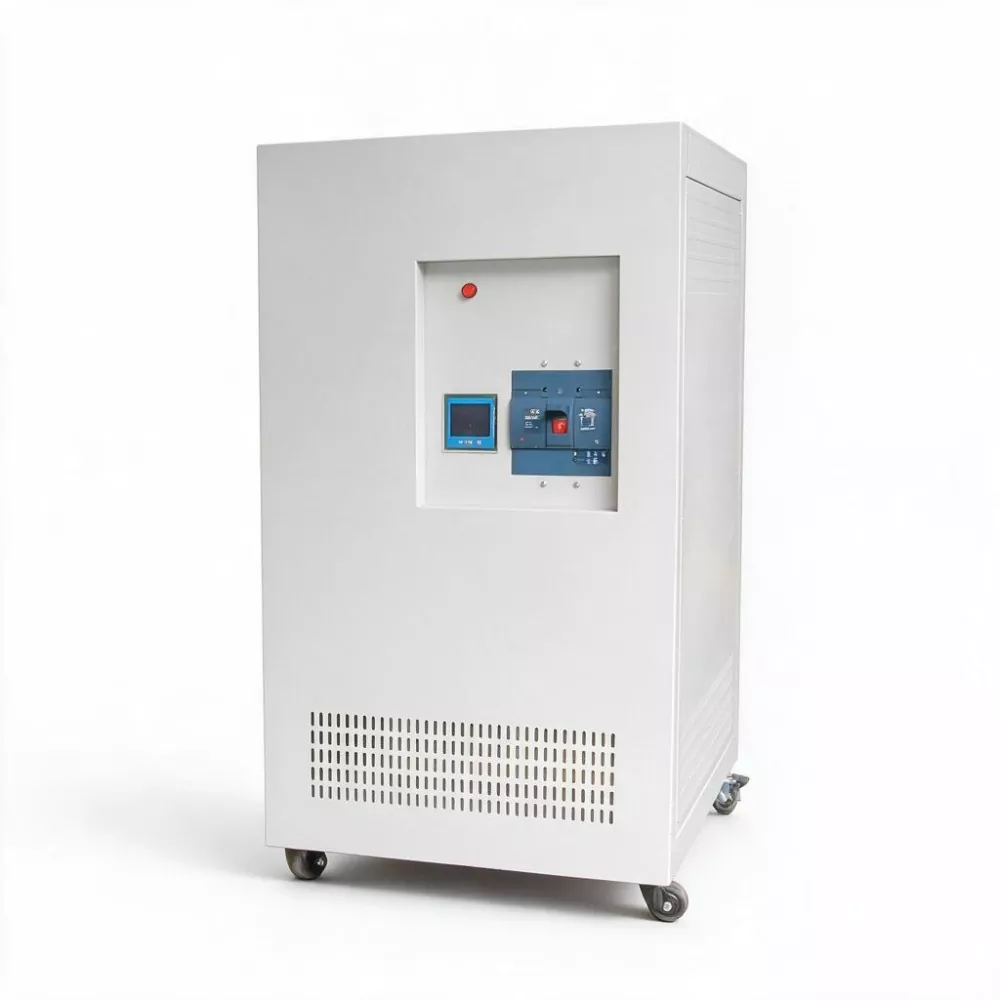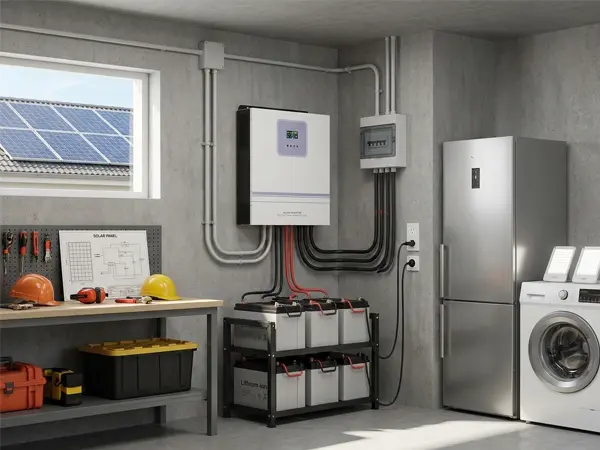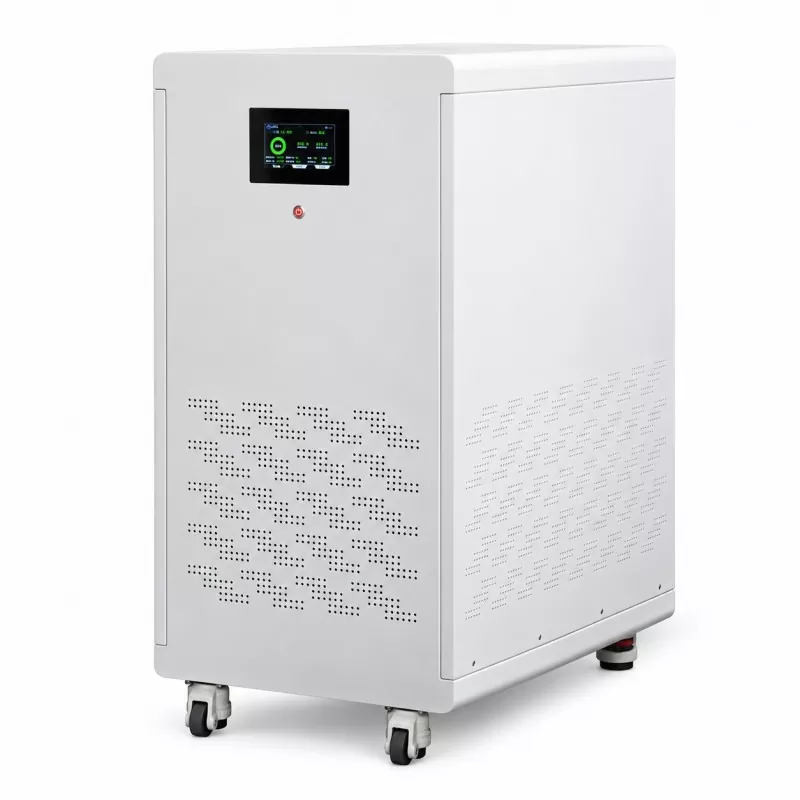
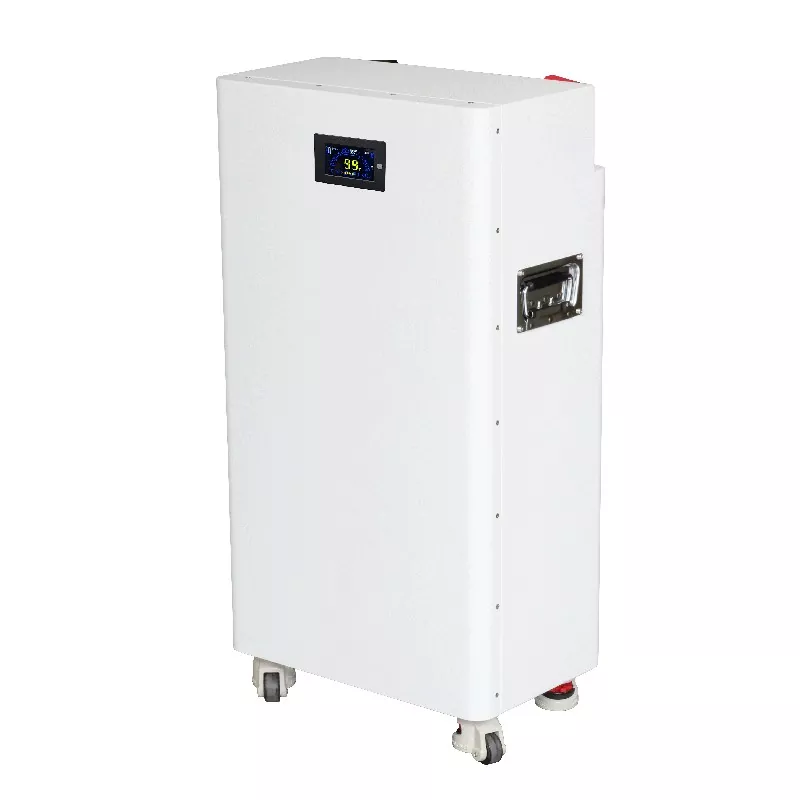
KTAC TECHNOLOGY provides the 51.2V 314Ah LiFePO4 Battery Pack for residential solar storage, off-grid power, and commercial backup applications. With 16.0768 kWh of rated energy, Grade-A cells, and an intelligent battery management system, it offers a practical foundation for scalable energy storage projects.
The 51.2V 314Ah LiFePO4 Battery Pack combines a nominal voltage of 51.2V with a capacity of 314Ah to deliver approximately 16.08 kWh of rated energy. Designed for applications that require dependable power storage, it features lithium iron phosphate chemistry, an intelligent battery management system (BMS), CAN and RS485 communication, and support for parallel expansion. These capabilities make it suitable for solar self-consumption, household backup power, remote installations, and selected commercial energy storage systems. Understanding its technical specifications, inverter compatibility, operating conditions, and installation requirements helps buyers select a battery solution that meets their actual energy demands.
1. What Does a 51.2V 314Ah LiFePO4 Battery Pack Offer?
2. What Are the Key Technical Specifications?
3. Why Choose LiFePO4 Battery Technology?
4. How Does the Intelligent BMS Improve Battery Management?
5. Where Can This Battery Pack Be Used?
6. How Can You Plan Battery Capacity and Expansion?
7. What Should Buyers Check Before Purchasing?
9. Conclusion: Choosing the Right Energy Storage Solution
Battery voltage and amp-hour capacity are two essential specifications when evaluating an energy storage system. Voltage indicates the battery's nominal electrical potential, while amp-hour capacity describes how much electric charge it can store under specified test conditions.
The rated energy can be estimated by multiplying nominal voltage by rated capacity:
51.2V × 314Ah = 16,076.8Wh = 16.0768kWh
This calculation shows that the battery provides approximately 16.08 kWh of nominal stored energy. However, the amount of electricity available to connected AC appliances will depend on the permitted depth of discharge, inverter efficiency, operating temperature, battery condition, and system settings.
For households with solar panels, this storage capacity can help capture excess daytime electricity for use in the evening. For off-grid installations, it can support essential equipment when solar generation is limited. In commercial environments, it can contribute to backup power and energy management strategies when integrated with a suitably rated inverter and electrical system.
The KTAC TECHNOLOGY 51.2V 314Ah LiFePO4 Battery Pack is therefore worth evaluating for projects that need substantial low-voltage energy storage in a single battery unit.
Technical specifications help engineers, installers, and purchasing teams determine whether a battery can operate safely and efficiently within a planned energy storage system. The following table summarizes the published specifications for the KTAC TECHNOLOGY model.
| Parameter | Specification |
|---|---|
| Product Model | LFP51.2V-314AH |
| Battery Chemistry | Lithium Iron Phosphate (LiFePO4) |
| Nominal Voltage | 51.2V |
| Rated Capacity | 314Ah |
| Rated Energy | 16.0768 kWh |
| Cell Configuration | 1P16S |
| Cell Brand | CORNEX |
| Operating Voltage Range | 42V–58.4V |
| Rated Charge/Discharge Current | 200A at 25 ± 2°C |
| Maximum Charge/Discharge Current | 200A |
| Charging Temperature | 0°C to 40°C |
| Discharging Temperature | -20°C to 40°C |
| Communication Interfaces | CAN and RS485 |
| Parallel Connection | Up to 16 units, subject to system requirements |
| Net Weight | 116.5 kg |
| Dimensions | 440 × 270 × 850 mm |
| Built-in Circuit Breaker | 200A |
| Published Cycle Life | 6,000 cycles at 25°C and 80% depth of discharge |
| Published Certifications | IEC 62619, UN 38.3, CE |
Note: These specifications are based on the product information published by KTAC TECHNOLOGY. Confirm the latest datasheet, certification scope, current limits, and installation instructions before procurement. Cycle life and performance depend on the specified test conditions and actual operating practices.
When reviewing the table, buyers should pay particular attention to current limits, temperature ranges, physical dimensions, and communication requirements. These factors affect inverter selection, cable sizing, equipment placement, and overall system performance.
Lithium iron phosphate batteries are widely used in stationary energy storage because their chemistry offers a useful balance of thermal stability, cycle durability, and operating performance. For applications that require repeated charging and discharging, these characteristics can support long-term energy management.
LiFePO4 chemistry is generally recognized for its favorable thermal stability compared with several other common lithium-ion chemistries. Nevertheless, no lithium battery is completely risk-free. Appropriate protection devices, installation practices, and operating limits remain essential.
KTAC TECHNOLOGY publishes a cycle-life figure of 6,000 cycles under stated conditions of 25°C and 80% depth of discharge. This provides a useful starting point for evaluating lifecycle value. Actual service life varies with temperature, charging behavior, discharge depth, and maintenance of the complete system.
With approximately 16.08 kWh of rated energy, one battery can reduce the number of units required compared with smaller-capacity alternatives. Fewer units may simplify system layout and cabling, although the final design must also account for load demand, usable energy, power limits, and redundancy requirements.
When connected to a compatible solar inverter or hybrid inverter, the battery can store surplus photovoltaic electricity for later use. This arrangement may reduce dependence on grid electricity, depending on local solar conditions, electricity tariffs, and household consumption patterns.
A battery management system is an important part of a modern lithium energy storage solution. It monitors operating conditions and coordinates battery protection functions within the limits of its design. KTAC TECHNOLOGY identifies intelligent battery management, pre-charging, cell balancing, and CAN/RS485 communication among the features of this model.
These functions can support more controlled battery operation in several ways:
Compatibility should never be assumed solely because two devices have the same nominal voltage. Before connecting the battery to a hybrid inverter, verify the supported communication protocol, firmware requirements, charge-voltage settings, current limits, and protection behavior.
For additional information about the company's product range, visit the KTAC TECHNOLOGY official website.
The combination of low-voltage architecture and substantial rated energy makes the battery relevant to several types of energy storage projects. The final application depends on the system's power requirements, electrical design, installation environment, and inverter compatibility.
In a residential photovoltaic system, the battery can store surplus solar generation during the day and supply stored energy when generation decreases. This can improve self-consumption and help households manage their electricity usage.
When integrated with a suitable inverter and transfer arrangement, the battery can provide backup power during grid interruptions. Essential loads may include lighting, refrigeration, networking equipment, and selected appliances. Actual backup duration depends on their combined demand and the usable battery energy.
Remote cabins, farms, and other locations without dependable grid access can use battery storage to balance variable renewable generation and changing electricity demand. System designers should account for seasonal solar variation and provide an appropriate backup generation strategy where necessary.
Retail premises, workshops, and selected commercial facilities may use battery storage for critical loads, solar energy utilization, or peak-demand management. The inverter's continuous output, surge capacity, and protection settings must be sufficient for the intended loads.
Remote monitoring equipment and telecommunications installations may benefit from stored energy where reliable grid access is limited. Buyers should verify environmental suitability, autonomy requirements, and compatibility with the equipment's DC power architecture before selecting a battery.
One of the main advantages of a high-capacity battery is that it can serve as a building block for a larger storage system. KTAC TECHNOLOGY states that the model supports up to 16 units in parallel, subject to the requirements of the complete system.
Using the nominal energy rating of one unit, the theoretical capacity calculation is as follows:
| Number of Batteries | Nominal Voltage | Combined Rated Energy | Typical Planning Consideration |
|---|---|---|---|
| 1 | 51.2V | 16.08 kWh | Single-home or smaller backup systems |
| 2 | 51.2V | 32.15 kWh | Extended backup duration |
| 4 | 51.2V | 64.31 kWh | Higher residential or selected commercial demand |
| 8 | 51.2V | 128.61 kWh | Larger storage installations |
| 16 | 51.2V | 257.23 kWh | Expanded systems requiring engineered integration |
All figures are theoretical nominal-energy totals rounded to two decimal places. They do not represent guaranteed usable energy or independently verified system output.
Before expanding a battery bank, consider the following requirements:
Do not connect different battery capacities or incompatible models in parallel unless the manufacturer explicitly approves the configuration. The total system must be engineered for safe current sharing, coordinated protection, and reliable communication.
Choosing a battery based only on its amp-hour rating can lead to an undersized or incompatible installation. A complete assessment should consider both stored energy and the power that the battery can safely deliver.
List the appliances or equipment that need power, estimate their operating hours, and calculate daily energy consumption in kilowatt-hours. Separate essential backup loads from optional loads to establish a realistic autonomy target.
Nominal capacity is not necessarily equal to usable energy. For example, a theoretical 16.0768 kWh battery operating within an illustrative 80% usable-energy window would provide approximately 12.86 kWh before inverter losses. This is a planning example, not a confirmed usable-energy specification for every operating condition.
Confirm the battery voltage range, charging profile, continuous current, peak requirements, and supported BMS protocol. A compatible voltage rating alone does not guarantee correct communication or safe operation.
The published unit weighs approximately 116.5 kg and measures 440 × 270 × 850 mm. Plan the installation around floor loading, handling access, cable routing, electrical clearances, and applicable local regulations. Installation should be completed by qualified professionals.
Request the current technical datasheet, applicable certification documents, warranty conditions, recommended operating limits, and after-sales support information. For international shipments, confirm transport documentation and any requirements that apply to the destination market.
Businesses comparing suppliers can also review the company's energy storage product portfolio to assess whether the battery can be integrated with the intended power conversion equipment.
Its nominal energy is approximately 16.0768 kWh, calculated by multiplying 51.2V by 314Ah. The usable energy available to connected equipment will be lower or otherwise limited according to the permitted discharge depth, conversion losses, and system operating conditions.
Backup duration depends on the average load and the usable energy available. For example, if a system delivers 12 kWh of usable energy and the connected loads average 1 kW, the theoretical runtime is about 12 hours before accounting for additional losses and operating constraints. Actual performance varies with the appliances being used and the inverter configuration.
KTAC TECHNOLOGY publishes a cycle life of 6,000 cycles at 25°C and 80% depth of discharge. This figure should be interpreted under its stated conditions rather than as a guaranteed number of cycles in every installation. Temperature, current, discharge depth, and battery management settings affect long-term performance.
Yes. The published product information states support for up to 16 parallel units. Before expansion, verify inverter capacity, battery compatibility, cabling, protection devices, communication configuration, and all manufacturer instructions. The supported configuration must be confirmed for the complete system.
No. Inverters may differ in supported voltage ranges, charge settings, communication protocols, firmware, and current limits. Check the manufacturer's compatibility information and confirm that the intended inverter supports the battery's BMS communication and operating requirements.
The published charging range is 0°C to 40°C, while the discharging range is -20°C to 40°C. These limits should be observed during installation and operation. If the site experiences temperatures outside these ranges, consult the manufacturer for an approved environmental solution.
Buyers should request the latest datasheet, installation manual, warranty terms, and applicable certification documentation. The product page lists IEC 62619, UN 38.3, and CE. Confirm the specific documents, product coverage, and destination-market requirements before making a purchasing decision.
The 51.2V 314Ah LiFePO4 Battery Pack offers approximately 16.08 kWh of nominal energy in a low-voltage battery configuration suited to residential solar storage, backup power, off-grid installations, and selected commercial projects. Its published features include Grade-A cells, an intelligent BMS, CAN and RS485 communication, and support for parallel expansion. The best results come from matching these capabilities to the actual energy demand, inverter specifications, installation environment, and safety requirements of the project.
For project-specific recommendations, customized energy storage configurations, or detailed technical documentation, explore the 51.2V 314Ah LiFePO4 Battery Pack from KTAC TECHNOLOGY. Contact our team to discuss your power requirements, system compatibility, and expansion plans. If you are comparing battery solutions for your next project, contact us to request product details and identify a suitable energy storage configuration for your application.