

Abstract · This article provides a detailed technical examination of the 3 Phase 1000kVA SCR Static AVR, exploring its operating principles, semiconductor technology, and critical role in maintaining stable voltage output for large generators and industrial power systems. The discussion covers SCR thyristor control, three-phase regulation architecture, response characteristics, and the engineering considerations that define reliable automatic voltage regulation in demanding applications.
01. Operating Principle of SCR Static AVR Technology
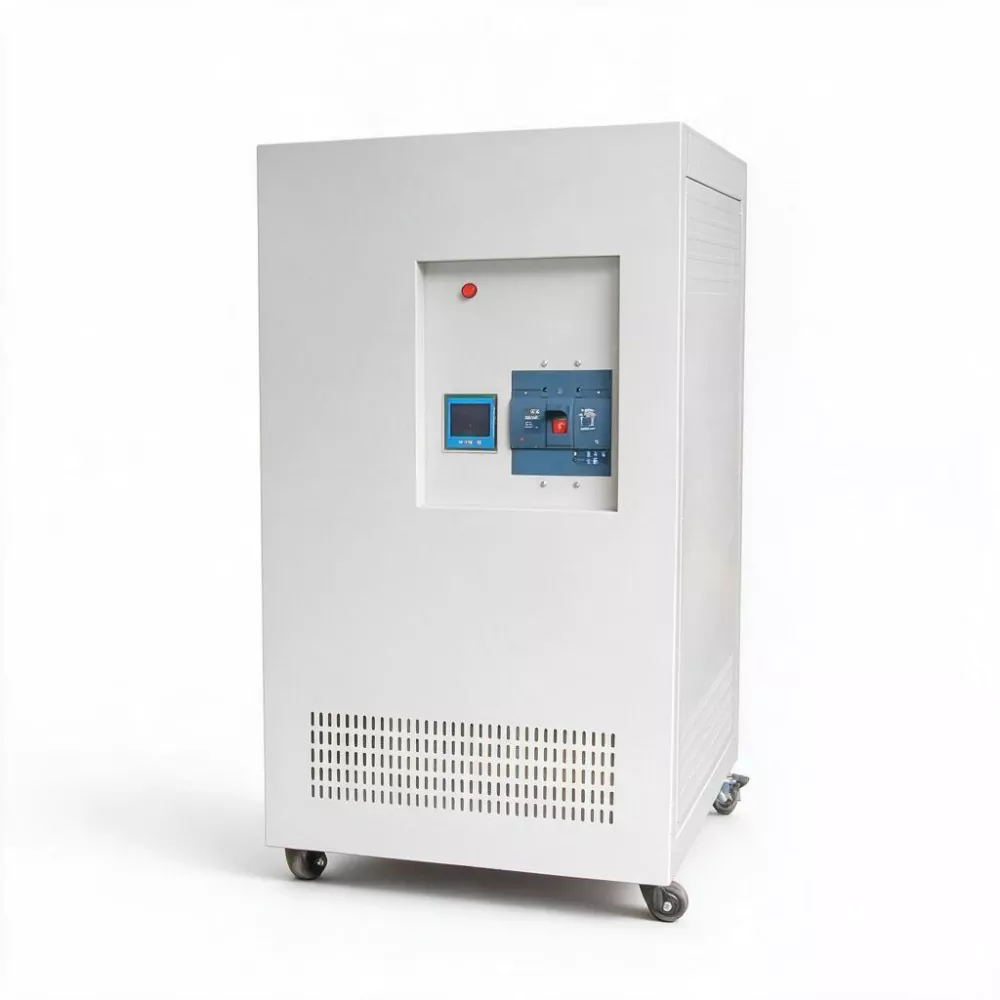
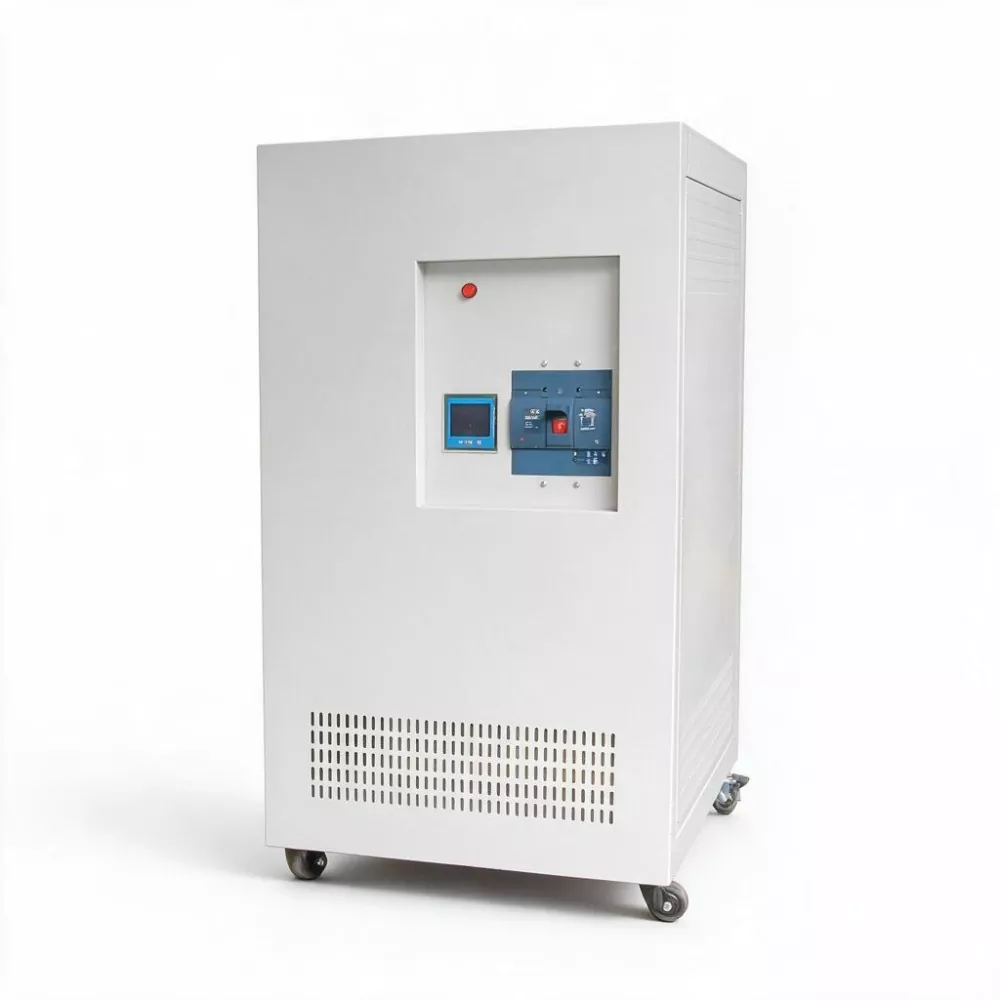
A 3 Phase 1000kVA SCR Static AVR is a solid-state automatic voltage regulator that uses silicon-controlled rectifiers (SCRs) to control the excitation current supplied to a generator's field winding. Unlike rotating exciters or magnetic amplifiers, the static AVR has no moving parts, relying entirely on semiconductor switching to regulate voltage output.
The operating principle is based on the controlled rectification of AC power from the generator's auxiliary winding or a separate excitation source. The SCRs are triggered at precise points in the AC waveform to vary the average DC excitation current delivered to the field. By continuously adjusting the firing angle of the thyristors in response to voltage feedback, the AVR maintains the generator's output voltage within tight tolerances regardless of load fluctuations. This static approach provides fast response, high reliability, and minimal maintenance compared to mechanical or rotating alternatives.
Static SCR (thyristor) based
Phase-angle firing of SCRs
Fast response, no moving parts
02. Three-Phase Regulation Architecture and Control Logic
Monitors all three output phases for accurate voltage feedback
Each phase can be regulated independently to correct imbalances
Proportional-integral-derivative control for precise voltage regulation
User-adjustable setpoint for different operating requirements
The three-phase architecture of the 3 Phase 1000kVA SCR Static AVR ensures balanced voltage regulation across all phases. The control logic continuously compares the sensed output voltage to a reference setpoint and adjusts the SCR firing angle to minimize the error. Advanced control algorithms, including PID (proportional-integral-derivative) loops, provide stable and accurate regulation under varying load conditions. The AVR can also be configured to regulate based on the average of the three phases or to respond to individual phase voltages, depending on the application requirements.
03. Semiconductor Components and Power Circuit Design
The power circuit of the 3 Phase 1000kVA SCR Static AVR is built around high-power thyristors (SCRs) selected for their voltage and current ratings. These components are the core of the static regulation system, switching the excitation power at the command of the control circuit.
- SCR Thyristors: High-power semiconductor switches capable of handling the excitation current required by large generators. They are selected for their voltage rating, current capacity, and thermal performance.
- Heat Sinks: Extruded aluminum heat sinks with forced-air cooling dissipate the heat generated by the SCRs during operation.
- Snubber Circuits: RC snubber networks protect the SCRs from voltage transients and ensure reliable commutation.
- Gate Drive Circuits: Isolated gate drive circuits provide the trigger pulses to the SCRs with precise timing and isolation from the power circuit.
- Control Board: A microprocessor-based control board processes the voltage feedback signals and generates the SCR firing commands.
The power circuit design must account for the high currents and voltages present in a 1000kVA system. Proper thermal management, transient protection, and isolation are essential for reliable operation and long service life.
Component Note: The SCRs are the most critical components in the static AVR. They must be selected with adequate voltage and current margins to withstand transient conditions and ensure reliable commutation. Regular inspection of the heat sink and cooling system is recommended to prevent overheating.
04. Voltage Regulation Performance and Response Time
The performance of the 3 Phase 1000kVA SCR Static AVR is defined by its voltage regulation accuracy and response time. These parameters determine how effectively the AVR maintains stable voltage under changing load conditions.
| Parameter | Typical Specification | Significance |
|---|---|---|
| Voltage Regulation | ±0.5% to ±1.0% | Steady-state accuracy under varying load |
| Response Time | Less than 20 milliseconds | Speed of voltage correction after load change |
| Voltage Recovery | Within 1 cycle | Time to return to steady state after disturbance |
| Frequency Range | 50 Hz or 60 Hz | Compatible with standard power frequencies |
| Excitation Current | Up to 10 A DC | Depends on generator field requirements |
| Ambient Temperature | -20°C to +60°C | Operating environment range |
Based on typical specifications for SCR static AVRs in this power class.
The fast response time of the static AVR is a key advantage over older electromechanical regulators. The SCRs can be triggered within milliseconds of detecting a voltage deviation, allowing the excitation current to be adjusted almost instantaneously. This rapid response minimizes voltage transients during load changes and helps maintain power quality for sensitive equipment.
05. Protection Features and Fault Management
The 3 Phase 1000kVA SCR Static AVR incorporates a range of protection features to ensure reliable operation and prevent damage to the AVR or the generator under fault conditions.
- Overvoltage Protection: Limits the generator output voltage to a safe maximum by reducing excitation current if the voltage exceeds the setpoint.
- Undervoltage Protection: Detects low voltage conditions and increases excitation current to restore voltage to the setpoint.
- Overcurrent Protection: Monitors the excitation current and limits it to prevent damage to the field winding or the SCRs.
- Overexcitation Protection: Prevents excessive field current that could cause overheating of the generator rotor.
- Loss of Sensing: Detects a failure in the voltage sensing circuit and defaults to a safe excitation level or shuts down the generator.
- Thermal Protection: Monitors the temperature of the SCR heat sink and reduces excitation or shuts down the AVR if overheating occurs.
These protection features are essential for ensuring the safety and reliability of the generator and the connected load. The AVR control system continuously monitors the operating parameters and responds to abnormal conditions within milliseconds, preventing damage and minimizing downtime.
06. Application Domains and Generator Compatibility
The 3 Phase 1000kVA SCR Static AVR is designed for use with large synchronous generators in a wide range of applications, including:
- Industrial Power Generation: Backup power for manufacturing plants, data centers, and critical infrastructure.
- Commercial Buildings: Standby generators for office buildings, hospitals, and shopping centers.
- Marine and Offshore: Power generation on ships, oil rigs, and offshore platforms.
- Telecommunications: Backup power for remote cell towers and data centers.
- Mining and Construction: Power for remote sites and heavy equipment.
- Renewable Energy: Voltage regulation for hydroelectric and biomass generators.
The AVR is compatible with a wide range of generator designs, including brushless and brushed excitation systems. It can be configured for different voltage and frequency ratings, making it suitable for global applications. The static design and robust construction ensure reliable operation in demanding environments.
Frequently Asked Questions
Technical specifications and performance data may vary. Always consult the manufacturer's documentation for your specific application requirements.